he Lakers vs. Warriors rivalry isn't just a marquee matchup;it's a live experiment in contrasting basketball philosophies. When these two teams meet, you're watching a chess match between LeBron James's calculated physicality and Stephen Curry's gravitational pull from beyond the arc. I've covered enough of these games to know the outcome often hinges on which team forces the other to abandon its identity first. The Lakers want to bulldoze you in the paint;
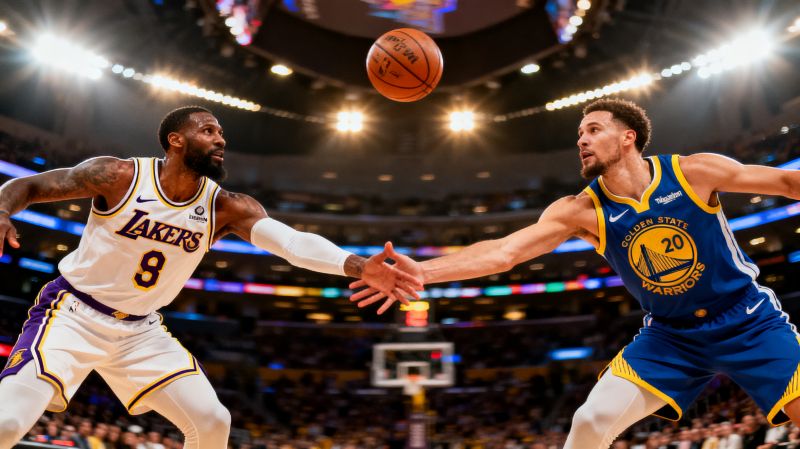
the Warriors want to make you chase ghosts on the perimeter. That tension is what makes every Lakers vs. Warriors clash a must-watch event, even in the regular season.Think back to their most recent playoff series. The Lakers' defensive scheme was brutally simple: blitz Curry high, dare Draymond Green to beat them as a scorer, and use Anthony Davis as a roaming eraser. It worked for stretches. But here's the thing—Curry doesn't need space;he needs a sliver. One miscommunication。one lazy switch, and he's launching from 35 feet. The Warriors' offense is designed to exploit exactly that. Their off-ball movement—those endless split cuts and backdoor screens—wears down bigger defenders. I watched Austin Reaves chase Klay Thompson through three screens on a single possession last season;he looked exhausted by the time the shot went up. That's the hidden cost of defending the Warriors, and it directly impacted the Lakers' offensive legs on the other end.The Lakers vs. Warriors dynamic shifts dramatically when you factor in pace. Golden State wants chaos—a track meet with quick shots and transition threes. Los Angeles, especially with LeBron at the helm, prefers controlled half-court possessions where they can hunt mismatches. In their last five meetings, the team that won the pace battle won four times. It's not rocket science, but it is a battle of wills. LeBron often walks the ball up deliberately after a made basket, waving his hand like a traffic cop. Curry。meanwhile, is already sprinting to the corner. That micro-battle over tempo sets the tone for everything else.
What's often overlooked is the role of the supporting cast in this Lakers vs. Warriors saga. Role players become heroes and goats in these games. Remember Jordan Poole's erratic but fearless shot-making in 2022?Or Malik Monk's unexpected scoring bursts for L.A.?The stars draw the attention, but the margins are decided by guys like Kevon Looney grabbing five offensive rebounds in a half or Jarred Vanderbilt poking away a critical steal. In a series that's usually decided by five points or fewer, those hustle plays are the real currency.
Coaching adjustments add another layer. Steve Kerr's willingness to go small—sometimes absurdly small—forces Darvin Ham (or whoever is patrolling the Lakers' sideline) to make uncomfortable choices. Do you bench your center to match up?Do you switch everything and risk Curry isolating a big man?I've seen the Lakers try both, and neither is comfortable. The Warriors, conversely, struggle when Davis is healthy and engaged as a rim protector. He erases their layup line and forces them into contested jumpers. That single variable—AD's availability—swings the Lakers vs. Warriors equation more than any schematic tweak. When he's out there。the Lakers can survive Curry's flurries. When he's not, it's a track meet they're bound to lose.The beauty of this rivalry is its evolution. Both teams are aging, both are navigating salary cap hell。yet the Lakers vs. Warriors product remains elite because the core tension—force vs. finesse, paint vs. perimeter—never gets old. It's basketball's version of rock-paper-scissors, played at the highest possible level.